Accessible Transport Services for People with Disabilities: A Practical Guide
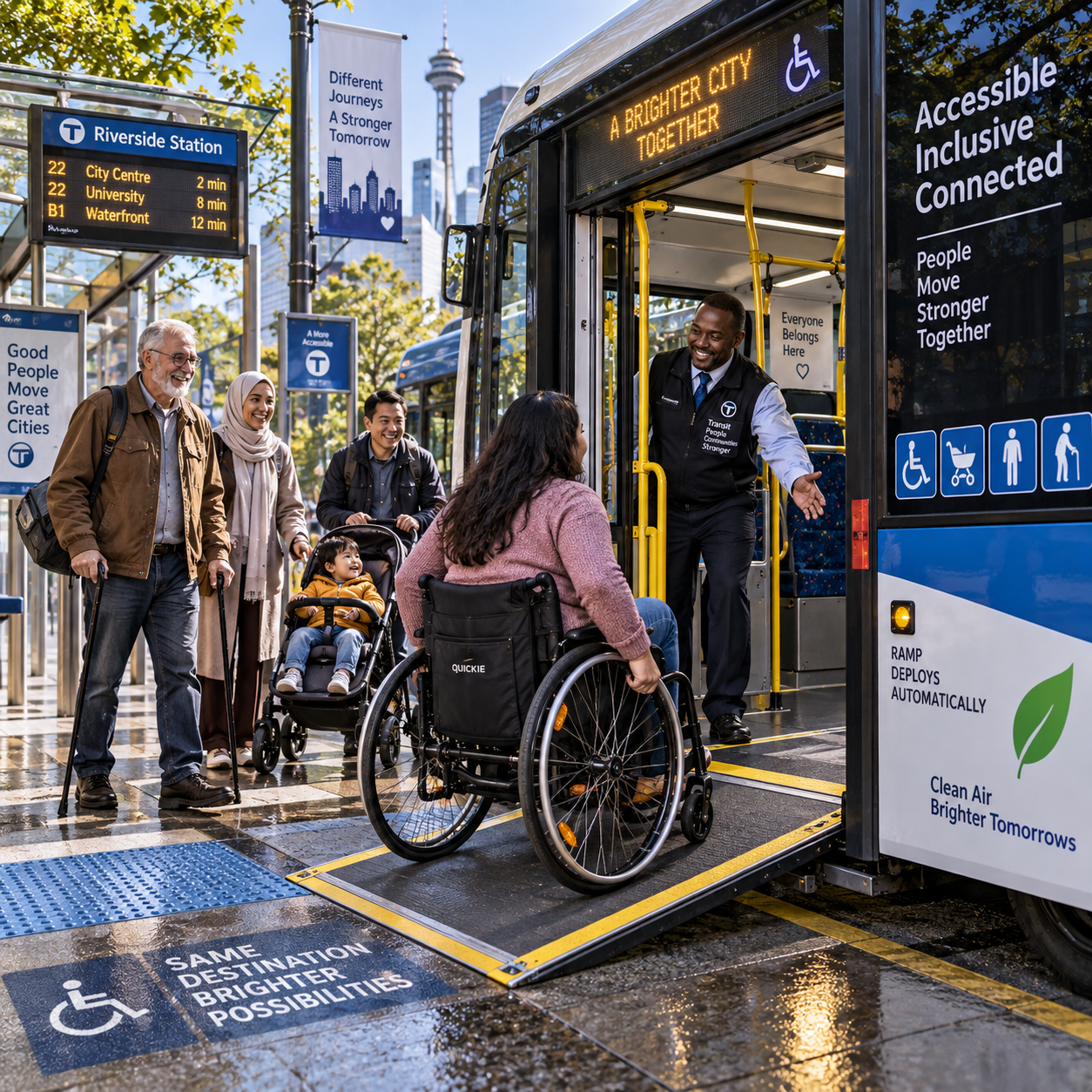
Accessible transport services for people with disabilities make it easier to travel to work, education, healthcare, shopping, and community activities. They may include accessible public transport, wheelchair-accessible vehicles, travel assistance, and specialised services for passengers who cannot use a regular route independently.
Access varies between transport modes, routes, vehicles, and stations. Checking current information with the relevant transport authority before travelling can prevent avoidable problems and helps you choose the service that matches your needs.
What Are Accessible Transport Services?
Accessible transport services are public, community, or specialised transport options designed to support passengers with physical, sensory, cognitive, and other disabilities. They combine accessible vehicles, usable infrastructure, clear information, and assistance when needed.
Accessibility can involve more than step-free boarding. A passenger may need space for a wheelchair or mobility scooter, audible and visual travel announcements, a quieter boarding process, help understanding a route, or permission to travel with a support person or service animal.
Common services include:
- Fixed-route buses, trains, trams, and ferries with accessibility features.
- Paratransit for eligible passengers whose disabilities prevent them from using some or all regular services.
- Demand-responsive transport that operates after a passenger requests a trip.
- Community transport and assisted travel for local journeys.
- Station, stop, and interchange assistance provided by transport staff.
No single design meets every access need. A low-floor bus may work well for a wheelchair user but still present difficulties if the stop has a narrow pavement or an uneven boarding area. Effective planning considers the complete journey from origin to destination.
Types of Accessible Transport Available
Accessible public transport usually includes modified buses, trains, trams, ferries, and community services, while paratransit and demand-responsive transport provide alternatives when fixed routes are unsuitable.
Fixed-route services
Accessible buses often use low floors, ramps, or lifts and include designated wheelchair spaces. Trains and trams may provide level boarding on some platforms, accessible carriages, priority seating, and staff assistance. Ferries can offer accessible boarding routes, although gangways, tides, vessel design, and terminal conditions may affect access.
Accessibility may differ within the same network. One station may have lifts and step-free platforms while another relies on stairs. A route marked accessible may also depend on a particular vehicle being assigned to the service.
Paratransit and demand-responsive transport
Paratransit generally provides pre-booked, shared or individual journeys for passengers who meet the service’s eligibility requirements. Demand-responsive transport works in a similar way but may serve a broader group and may operate within a defined zone rather than along a fixed route.
These services can offer flexible boarding locations and wheelchair-accessible vehicles. They often require registration, advance booking, journey windows, and accurate information about mobility aids. Rules, service areas, fares, and booking deadlines vary, so passengers should confirm details directly with the local transport authority.
Accessibility Features to Look For
The most useful accessibility features include step-free boarding, secure spaces for mobility aids, accessible stops, and information available in both visual and audio formats.
- Low-floor vehicles: Reduce the height between the pavement and vehicle entrance, particularly when paired with a suitable kerb or platform.
- Ramps and lifts: Provide boarding access for wheelchair users and passengers who cannot use steps. Check whether a ramp is manual or powered and whether vehicle staff must deploy it.
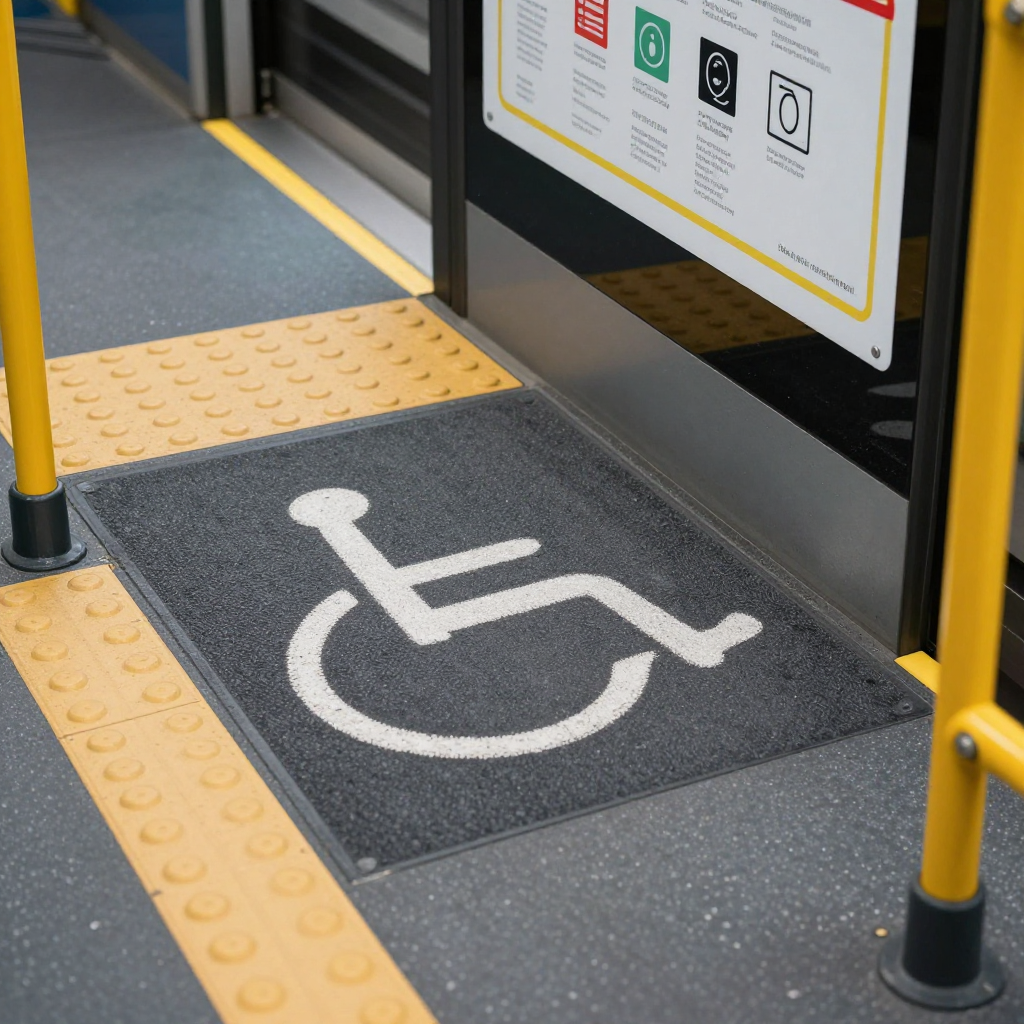
- Wheelchair and mobility-aid spaces: Allow a wheelchair, mobility scooter, or other aid to remain safely positioned during travel. Space can be limited during busy periods.
- Priority seating: Supports passengers who need extra legroom, stability, or a seat near the entrance.
- Audio and visual announcements: Identify stops, route changes, and safety information for passengers with visual or hearing disabilities.
- Accessible stations and stops: May include lifts, ramps, tactile paving, level platforms, lowered kerbs, handrails, and unobstructed waiting areas.
- Clear signage: Helps passengers locate entrances, lifts, ticket machines, help points, and accessible boarding areas.
Equipment can be temporarily unavailable because of maintenance, crowding, weather, or vehicle changes. Before travelling, check live service alerts and ask whether the specific departure, platform, or stop is accessible.
Eligibility, Registration, and Booking
Eligibility and registration depend on the service; fixed-route transport may be open to everyone, while paratransit usually requires an application and assessment before booking.
A typical process includes:
- Identify the service: Ask the transport authority whether a regular accessible route, travel assistance, community service, or paratransit option best fits the journey.
- Check eligibility: Review the published criteria and provide only the information requested. Eligibility often focuses on whether a person can use a regular service independently, rather than on a particular diagnosis alone.
- Register if required: Complete an application, assessment, or travel training process. Keep the registration number and renewal date in a safe place.
- Provide mobility details: Give accurate dimensions and weight for a wheelchair or mobility scooter if the operator requests them. This helps match the passenger with a suitable vehicle.
- Book the journey: Confirm the pickup window, destination, return trip, passenger details, support person, and any service-animal or mobility-aid requirements.
- Record the confirmation: Save the booking reference and the operator’s contact number in an accessible format.
Booking windows and cancellation policies vary. Choosing a specialised service for flexibility may mean accepting a longer pickup window or shared travel. If a booking affects a medical appointment, allow contingency time and ask how delays are handled.
Planning and Taking an Accessible Journey
To plan an accessible journey, check every stage of the route, confirm current equipment availability, arrange assistance early, and allow extra time for boarding or transfers.
- Map the full route: Check the path to the stop, boarding point, interchange, and final destination. A step-free vehicle cannot solve an inaccessible pavement or station entrance.
- Confirm service conditions: Look for lift closures, platform changes, roadworks, replacement buses, and temporary stop relocations.
- Describe your needs clearly: Instead of saying only that you need an accessible journey, explain whether you use a manual wheelchair, powered mobility scooter, walking aid, hearing support, visual guidance, or extra processing time.
- Request assistance: Contact the operator or station team before travelling when possible. Ask where to wait and how staff will identify you.
- Allow transfer time: Boarding a vehicle with a ramp, securing a mobility aid, or using a lift may take longer than a standard transfer.
- Carry essential details: Keep your booking reference, route information, emergency contact, and any required travel pass or identification accessible.
Passengers should follow staff instructions about ramp use and securing mobility aids. A support person may be helpful, but the need for one should not be assumed for every passenger. Service-animal rules also differ by operator, so confirm them before travel.
Passenger Assistance and Rights
Passengers can generally expect clear service information, reasonable access arrangements within the network’s capabilities, respectful treatment, and a way to request assistance or raise concerns.
Travel assistance may include help finding an accessible entrance, boarding or leaving a vehicle, transferring between platforms, locating a lift, or receiving information during disruption. Staff may not be able to provide personal care or physically lift a passenger, so ask the operator what assistance it can safely provide.
Passenger rights and enforcement mechanisms differ by country and transport mode. In the United States, the Federal Transit Administration explains accessibility requirements under the Americans with Disabilities Act. Elsewhere, the relevant national or regional transport regulator may publish comparable guidance.
When an accessible feature fails, report it promptly. A record of the route, vehicle, time, location, and impact gives the operator useful evidence for maintenance and service planning.
Reporting Accessibility Issues and Getting Support
To report an accessibility issue, contact the transport authority or operator with the journey details, describe the access barrier, explain its effect, and request a reference number for follow-up.
What to include in a report
- Date and approximate time of travel.
- Route number, service name, vehicle number, station, stop, or platform.
- The specific problem, such as a broken lift, missing ramp, blocked wheelchair space, inaccessible replacement bus, or unclear announcement.
- Whether you were delayed, unable to board, stranded, or required to take another route.
- Photos or screenshots, if safe and appropriate, without compromising another passenger’s privacy.
- Your preferred contact method and any request for a response or reasonable adjustment.
Use the operator’s accessibility or customer-service channel for routine feedback and the emergency contact route when there is an immediate safety risk. If the response does not resolve the problem, ask about the formal complaints process, independent appeals body, or transport regulator.
Keep copies of correspondence and complaint reference numbers. A single report can fix one incident; consistent reports help authorities identify recurring failures at particular stops, vehicles, or interchange points.
Frequently Asked Questions
Who can use accessible transport services?
Anyone who needs an accessibility feature or assistance may use accessible fixed-route transport, subject to the operator’s rules. Paratransit and some demand-responsive services may require an eligibility assessment and registration.
How do I book an accessible journey or request assistance?
Contact the transport operator or transport authority through its accessibility, booking, or customer-service channel. Provide the route, date, time, mobility aid, boarding needs, and any support-person or service-animal information.
Can I travel with a wheelchair, mobility scooter, or service animal?
Many services accommodate wheelchairs and mobility aids, but vehicle dimensions, securement space, and mobility-scooter policies vary. Service-animal rules also differ, so confirm requirements before travelling.
What should I do if accessibility equipment is unavailable?
Ask staff for the safest alternative, such as another accessible vehicle, route, station entrance, or replacement service. Report the failure afterward and include the exact location and time.
Where can I report an accessibility problem?
Report it to the transport operator or local transport authority using its accessibility or complaints channel. Include the journey details and request a reference number so the issue can be tracked.